Table of Contents
Key Takeaways
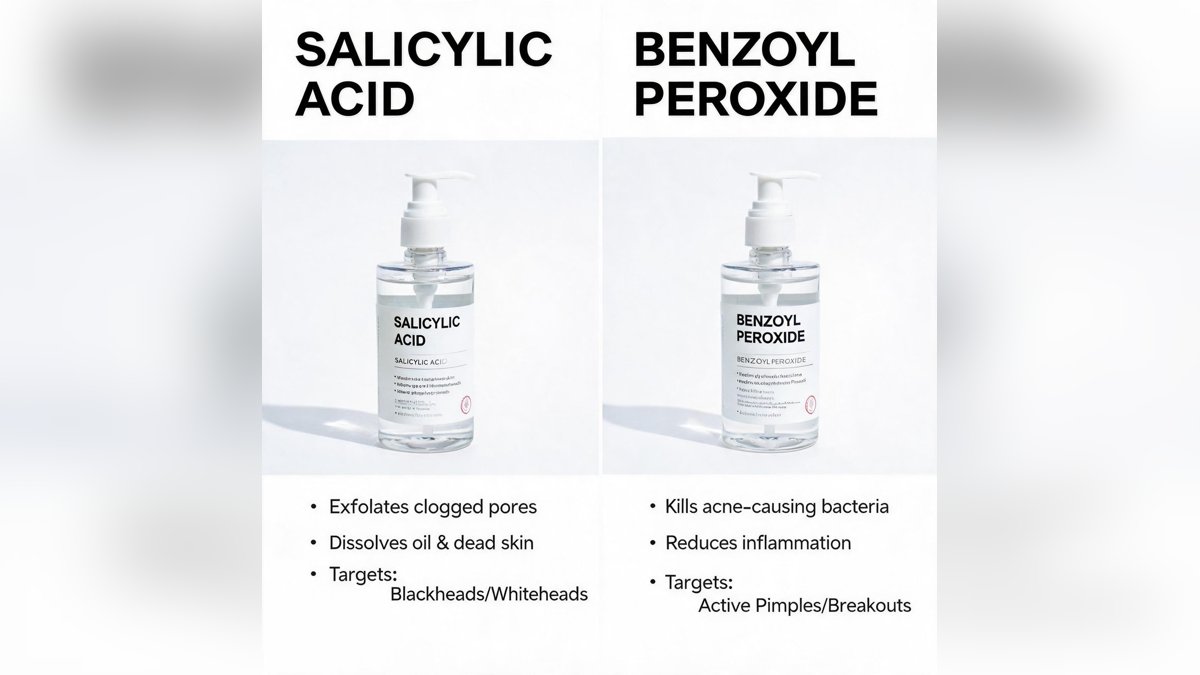
- Salicylic acid is best for whiteheads and blackheads — it dissolves clogs from inside the pore but does not kill bacteria
- Benzoyl peroxide kills C. acnes bacteria on contact and is the top choice for inflamed papules and pustules, starting with 2.5% to minimize irritation
- Retinoids prevent all types of acne by normalizing cell turnover, but require 8 to 12 weeks of consistent use and a purging period of 4 to 8 weeks
- Combine ingredients in separate AM/PM routines rather than layering them together to reduce irritation risk
- Higher benzoyl peroxide concentrations do not work better — 2.5% is equally effective as 10% with far less irritation
Walk into any drugstore acne aisle and you are confronted with shelves of products containing three main active ingredients: salicylic acid, benzoyl peroxide, and retinoids. Each one claims to fight acne, but they work through completely different mechanisms, target different aspects of the acne process, and come with their own set of benefits and drawbacks.
Choosing the wrong ingredient for your acne type wastes time and money, and it can also irritate your skin unnecessarily. This guide breaks down exactly how each ingredient works, what type of acne it treats best, what side effects to expect, and how to combine them safely for maximum results.
Salicylic Acid: The Pore Unclogger
Salicylic acid is a beta hydroxy acid (BHA) that is oil-soluble, meaning it can penetrate deep into the pore to dissolve the sebum and dead skin cells that form comedones. This makes it the ingredient of choice for whiteheads and blackheads. Unlike alpha hydroxy acids (AHAs) that work on the skin surface, salicylic acid travels down into the follicle and works from the inside out.
Over-the-counter salicylic acid products typically contain 0.5 to 2 percent concentrations. At these levels, it is effective for mild comedonal acne and helps keep pores clear when used consistently as part of a maintenance routine. It also has mild anti-inflammatory properties, which makes it somewhat useful for red papules as well, though it is not as strong as benzoyl peroxide for inflamed lesions.
The main limitation of salicylic acid is its effectiveness ceiling. It works well for surface-level clogs but cannot penetrate deeply enough to treat nodular or cystic acne. Some people also find that daily use dries out their skin, especially if they are using other active ingredients. Starting with every other day application and building up to daily use helps minimize dryness and irritation.
Salicylic acid performs best in leave-on products like serums and toners rather than cleansers that get rinsed off too quickly to penetrate effectively. Apply it after cleansing and before moisturizer, and always follow with SPF in the morning since BHAs can increase sun sensitivity.
Benzoyl Peroxide: The Bacteria Killer
Benzoyl peroxide is the gold standard for inflammatory acne because it kills Cutibacterium acnes bacteria on contact. It works by introducing oxygen into the pore, creating an environment where the anaerobic bacteria cannot survive. Unlike antibiotics, bacteria cannot develop resistance to benzoyl peroxide, making it a reliable long-term option.
Available in concentrations from 2.5 to 10 percent, benzoyl peroxide is equally effective across all strengths — higher concentrations do not kill more bacteria, they just cause more irritation. Dermatologists consistently recommend starting with 2.5 or 4 percent formulations because they provide the same antibacterial benefit with significantly less redness, peeling, and stinging.
"There is no evidence that 10 percent benzoyl peroxide works better than 2.5 percent. The higher concentration only increases irritation without improving efficacy. Patients who start with a lower strength are much more likely to stick with treatment because their skin tolerates it better, and consistency is what drives results."
The most common complaint about benzoyl peroxide is bleaching. It bleaches fabric, hair, and colored towels on contact. Wash your hands thoroughly after applying it, and use white pillowcases and towels during treatment. Leave-on gels are more effective than wash-off cleansers because the ingredient needs sustained contact with the skin to kill bacteria effectively. Short-contact therapy — applying it for two to five minutes then rinsing — is a good option for sensitive skin that cannot tolerate leave-on application.
Benzoyl peroxide is particularly effective when combined with a topical antibiotic like clindamycin. The combination is more effective than either ingredient alone, and the benzoyl peroxide prevents the antibiotic resistance that would develop if clindamycin were used by itself.
Retinoids: The Cell Turnover Regulators
Retinoids are vitamin A derivatives that work at the cellular level to normalize the skin cell turnover process. In acne-prone skin, cells inside the pore shed irregularly and clump together instead of sloughing off individually. Retinoids correct this process, preventing the formation of microcomedones — the invisible precursors to all acne lesions.
Adapalene 0.1 percent is available over the counter under the brand name Differin and is the most well-studied retinoid for acne. It is more stable and less irritating than prescription tretinoin while still being highly effective for both comedonal and inflammatory acne. Prescription-strength retinoids like tretinoin and tazarotene offer faster and more dramatic results but come with a longer adjustment period and more side effects.
The retinoid adjustment period, often called the purging phase, typically lasts 4 to 8 weeks. During this time, existing clogged pores come to the surface as breakouts, making the skin look worse before it improves. Purging is a normal sign that the retinoid is working, not a reason to stop. Starting with two applications per week and gradually increasing frequency helps minimize the intensity of the purge.
Retinoids must be used at night because they degrade in sunlight. They also increase sun sensitivity, so morning SPF is non-negotiable during retinoid treatment. Apply retinoids to dry skin after cleansing — applying them to damp skin increases absorption and irritation. Wait 15 to 20 minutes after washing your face before applying the retinoid for best tolerance.
Head-to-Head Comparison
The table below compares the three ingredients across key factors to help you decide which one fits your needs.
| Factor | Salicylic Acid | Benzoyl Peroxide | Retinoids |
|---|---|---|---|
| Primary Mechanism | Dissolves pore clogs | Kills bacteria | Normalizes cell turnover |
| Best For | Whiteheads, blackheads | Papules, pustules | All types, especially comedonal |
| Onset of Results | 4-6 weeks | 2-4 weeks | 8-12 weeks |
| Common Side Effects | Dryness, mild irritation | Bleaching, stinging, dryness | Purging, peeling, redness |
| OTC Availability | Yes, 0.5-2% | Yes, 2.5-10% | Adapalene OTC, others Rx |
| Best Time to Apply | AM or PM | AM (leave-on) or PM (wash-off) | PM only |
How to Combine Them Safely
Using multiple acne ingredients together can produce better results than any single ingredient alone, but the combination must be strategic to avoid overwhelming the skin. The safest approach is a split AM/PM routine that separates potentially irritating ingredients.
A common and effective combination uses benzoyl peroxide in the morning and a retinoid at night. This covers both bacterial control and cell turnover without overlapping irritating ingredients at the same time. If you want to add salicylic acid, use it in the morning before benzoyl peroxide, but only if your skin tolerates it. Many people find that salicylic acid plus a retinoid is too drying and choose one or the other.
Never use salicylic acid and a retinoid in the same routine session unless your skin has built up significant tolerance over months. Both ingredients increase cell turnover and using them together dramatically raises the risk of irritation, peeling, and a damaged skin barrier. If you experience stinging, tightness, or redness that does not go away within 30 minutes of moisturizing, you are overdoing it. For a complete step-by-step routine, see our guide to building an acne-safe skincare routine.
Frequently Asked Questions
Common concerns about choosing between salicylic acid, benzoyl peroxide, and retinoids for acne
Can I use all three ingredients in my routine at the same time?
It is possible but must be done carefully. The safest approach is to use benzoyl peroxide in the morning and a retinoid at night, with salicylic acid limited to a wash-off cleanser or used only on non-retinoid nights. Using all three in full leave-on forms simultaneously will likely cause significant irritation. Start with one ingredient, add the second after 4 weeks, and only add the third if your skin tolerates it.
Frequently Asked Questions
Common concerns about choosing between salicylic acid, benzoyl peroxide, and retinoids for acne
Can I use all three ingredients in my routine at the same time?
It is possible but must be done carefully. The safest approach is to use benzoyl peroxide in the morning and a retinoid at night, with salicylic acid limited to a wash-off cleanser or used only on non-retinoid nights. Using all three in full leave-on forms simultaneously will likely cause significant irritation. Start with one ingredient, add the second after 4 weeks, and only add the third if your skin tolerates it.
Does benzoyl peroxide really bleach clothes and towels?
Yes, benzoyl peroxide bleaches any fabric it comes into contact with, including colored towels, pillowcases, shirts, and even hair. The bleaching is permanent. Use white bedding and towels during treatment, wash your hands thoroughly after application, and wait until the product is fully dry before putting on clothes or touching fabrics.
What is retinoid purging and how long does it last?
Purging is a temporary worsening of acne that occurs when retinoids accelerate the skin cell turnover process, bringing existing clogged pores to the surface as visible breakouts. It typically lasts 4 to 8 weeks and is a normal sign that the retinoid is working. Distinguish purging from irritation by location — purging occurs in areas where you normally break out, while irritation breakouts appear in new places.
Which ingredient is best for acne scars and dark marks?
Retinoids are the most effective of the three for treating post-inflammatory hyperpigmentation and textural scarring because they accelerate cell turnover and stimulate collagen production. Salicylic acid offers mild exfoliation that can help fade surface marks over time. Benzoyl peroxide does not directly treat scars but prevents new ones by stopping active breakouts.
Do I need to use all three if my acne is mild?
No. Mild acne rarely requires all three ingredients. Start with one based on your acne type: salicylic acid for whiteheads and blackheads, benzoyl peroxide for occasional red pimples, or adapalene if you have a mix of both. Add a second ingredient only if you do not see adequate improvement after 8 to 12 weeks of consistent use.
Related Articles
Your Next Step
Start with one ingredient based on your dominant acne type. Choose salicylic acid if whiteheads and blackheads are your main concern, benzoyl peroxide if you deal with red inflamed pimples, or a retinoid if you have a mix of both and want long-term prevention. Use it consistently for 8 to 12 weeks before deciding whether to add a second ingredient.
Once your skin has adjusted to the first ingredient, consider a split routine with benzoyl peroxide in the morning and a retinoid at night. This combination targets both bacterial growth and cell turnover without overlapping irritating ingredients. Never add more than one new active at a time, and always listen to your skin — irritation sets back progress far more than going slowly.