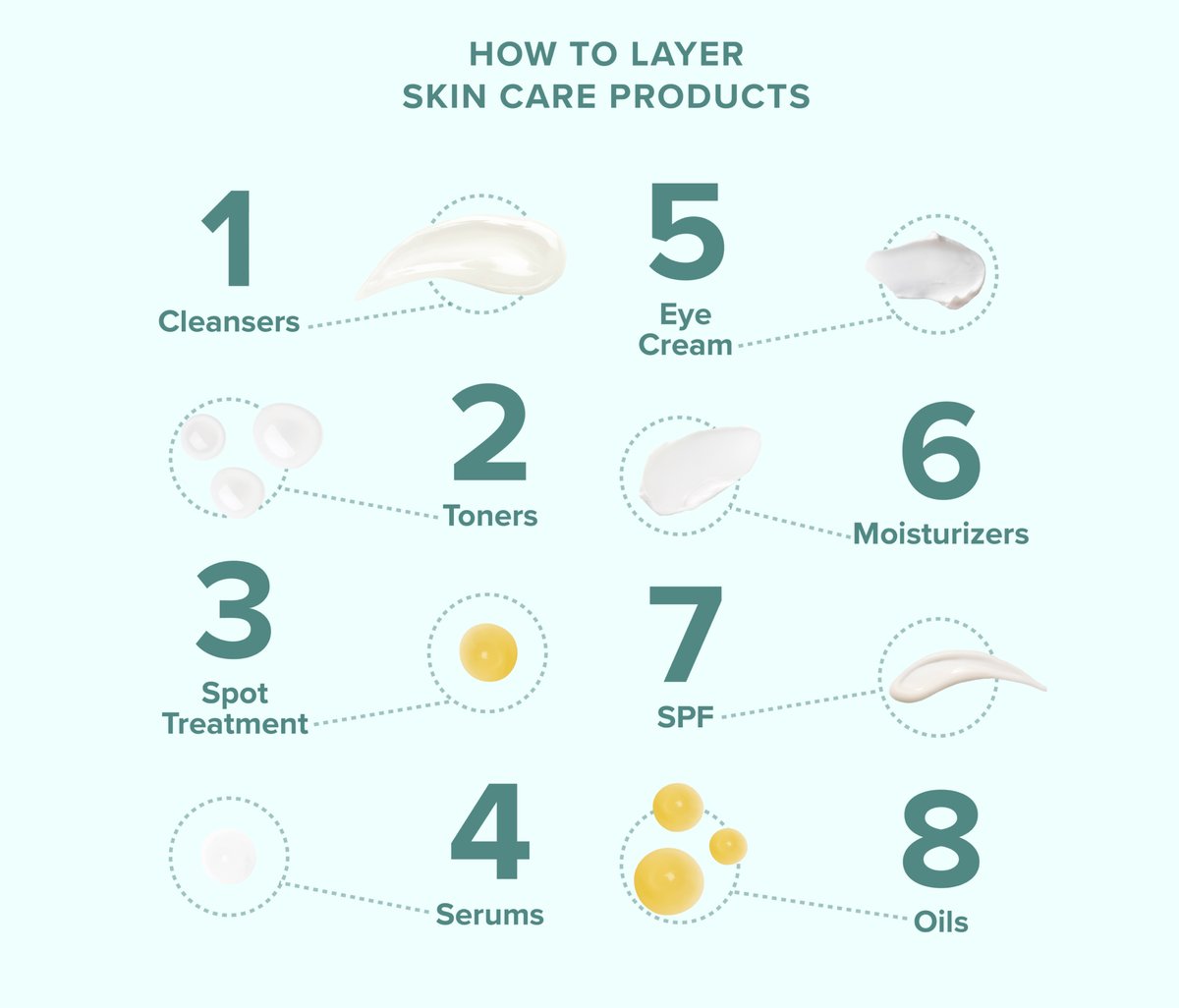
Applying skincare products in the correct order is just as important as choosing the right products. You could own the most expensive vitamin C serum and the most advanced moisturizer on the market, but if you apply them in the wrong order, neither will work as intended. The simple rule that governs all skincare layering is this: apply products from thinnest to thickest consistency.
When you apply a thick cream before a thin serum, the serum cannot penetrate the barrier the cream has already created. The result is wasted product, pilling, and skin that never gets the full benefit of what you are applying. This guide walks through the exact order for both your morning and evening routines, explaining why each step matters and what happens when you get the sequence wrong.
The Golden Rule of Skincare Layering
The thinnest-to-thickest rule is the foundation of every effective skincare routine. Thinner, water-based products have smaller molecules that can penetrate deeper into the skin. Thicker, oil-based products have larger molecules that sit on the surface. If you apply a thick cream first, it blocks the thinner products from reaching the skin at all.
Think of your skin like a sponge. A thin liquid (toner or serum) soaks in quickly. A thick cream sits on top and seals everything underneath. By layering from thinnest to thickest, you allow each product to absorb and do its job before the next layer seals it in. This principle applies regardless of how many products you use — whether you follow a minimalist three-step routine or a comprehensive ten-step regimen. For the right products to layer, see our cleanser guide and moisturizer ingredient guide.
The Correct AM Layering Order
Your morning routine has one primary goal: protection. Every product in the sequence prepares your skin for the final and most important layer — sunscreen. Here is the correct order for the AM routine.
Step 1: Cleanse. Start with a gentle cleanser or splash of water to remove overnight residue without stripping the barrier. Pat dry, leaving skin slightly damp for the next step.
Step 2: Tone. Apply an alcohol-free hydrating toner with clean hands or a cotton pad. Toner restores pH balance and preps the skin to absorb serums. Press gently into the skin rather than rubbing.
Step 3: Serum (Vitamin C or Antioxidant). Apply a few drops of vitamin C serum to the face and neck. Antioxidants protect against free radicals and brighten the complexion. Allow 30 to 60 seconds for absorption before moving to the next step.
Step 4: Eye Cream (Optional). If you use eye cream, apply it before moisturizer. Use your ring finger to gently tap a rice-grain-sized amount around the orbital bone.
Step 5: Moisturizer. Lock in hydration with a moisturizer appropriate for your skin type. Lightweight gel formulas work best in the morning under sunscreen and makeup.
Step 6: SPF — The Non-Negotiable Final Step. Sunscreen is always the last step in your morning routine. No product goes on top of sunscreen, as any additional layer can disrupt the film-forming process that ensures even UV protection. Apply half a teaspoon to face and neck. For the full science, read our complete guide to SPF and sunscreen.
"The most common layering mistake people make in the morning is applying moisturizer after sunscreen. This completely defeats the purpose of SPF by creating an uneven film that leaves gaps in protection. Sunscreen must be the final step — it forms a continuous barrier that cannot be disrupted by products applied on top."
The Correct PM Layering Order
Your evening routine focuses on repair and regeneration. The order shifts slightly to accommodate treatment products that work best on clean, bare skin. Here is the correct PM sequence.
Step 1: Double Cleanse. Start with an oil-based cleanser to dissolve sunscreen and makeup, then follow with a water-based cleanser. Removing all traces of the day is essential for the rest of your routine to work.
Step 2: Tone (Hydrating or Exfoliating). Apply your usual hydrating toner. On exfoliation nights (2 to 3 times per week), replace your hydrating toner with an AHA or BHA exfoliating toner. Do not exfoliate and use retinol on the same night.
Step 3: Treatment (Retinol or Targeted Serum). Apply retinol, a peptide serum, or a targeted treatment. Retinol should be applied to completely dry skin — applying it to damp skin increases absorption and irritation risk. Wait 15 to 20 minutes after cleansing before applying retinol.
Step 4: Eye Cream (Optional). Apply a richer night eye cream if desired, using the same gentle tapping motion.
Step 5: Moisturizer (Night Cream). Seal everything with a richer, more nourishing night cream. Look for ingredients like ceramides, peptides, and squalane that support overnight repair. A slightly thicker layer than your morning moisturizer is appropriate.
For a detailed breakdown of why morning and evening routines differ, read our comparison of AM versus PM skincare. And for choosing the right moisturizer for each routine, see our moisturizer ingredient guide.
AM vs. PM Layering at a Glance
| Order | AM Routine | PM Routine |
|---|---|---|
| 1 | Gentle cleanse or water rinse | Oil cleanser (first cleanse) |
| 2 | Toner (hydrating) | Water-based cleanser (second cleanse) |
| 3 | Vitamin C serum | Toner (hydrating or exfoliating) |
| 4 | Eye cream (optional) | Retinol or treatment serum |
| 5 | Moisturizer (lightweight) | Eye cream (optional) |
| 6 | SPF 30+ | Moisturizer (rich night cream) |
Common Layering Mistakes to Avoid
Even with the correct order, several mistakes can undermine your routine. Not waiting between layers is the most common — if you apply products too quickly, they mix together on your skin instead of absorbing in sequence. Wait at least 30 seconds between each step. For retinol or prescription treatments, wait 15 to 20 minutes.
Applying too much product is another frequent error. Serums need only a few drops. Moisturizer needs about a dime-sized amount. More product does not mean better results — it increases the chance of pilling and reduces the effectiveness of each layer. Using incompatible ingredients together — such as vitamin C and retinol in the same routine — can cause irritation. Save retinol for the evening and vitamin C for the morning. Finally, do not forget your neck and chest. These areas show aging just as noticeably as the face and deserve the same products in the same order.


